

Why Children’s Literature?
The question I am most often asked, answered (because it is NOT “crud”)

It is an unspoken assumption that if you are an English teacher, you harbor a secret desire to write a book. A Mr. Holland’s Opus, stuffed away in a drawer, a secret file on your computer, that will emulate the literary greats you teach. But the imagined manuscript only makes rare appearances, after a rough night toiling over badly written essays in place of “one more glass of wine” that would render you an alcoholic. It is tinkered with, but not given full attention because of economics, life, time – but most importantly, a lack of confidence.
So when COVID came, and I reevaluated my thirty-year career as an educator and academic, I had to ask myself, “Do I dare? Do I dare eat a peach?” (The Lovesong of J. Alfred Prufrock, T.S. Eliot) Ultimately, I decided to take a bite of the forbidden fruit and step outside my comfort zone. But I floundered. I lacked confidence. Unsure of what to write and what to do, I threw myself into many projects — more academic writing, working on a start-up, and volunteering.
It wasn’t until I was sitting in a circle with incarcerated women, sharing a piece I had written during our study of children’s literature, that I got over myself. They told me, “You need to be writing for kids.” They knew how a lifetime of pain, invisibility, and trauma leads to an eternal struggle with shame and remorse. They challenged me to face my fear and follow my heart to do something good.
Scared, but encouraged, I accepted their challenge. I knew nothing about writing books for kids, but I understood young people. Not knowing where to begin, I fell back on the skills I already had. As an expert reader, I could break down texts to see what appealed to kids. As a researcher, I began a journey to understand the craft of writing and the complexities of the publishing industry. I have taken classes, networked, attended conferences, and spent hours and hours reading and writing.
Yet, it is interesting that people are still surprised to hear I abandoned everything to write for kids. The question I am most often asked, besides “What are you writing?” is “Why children’s literature?” It is a question that unsettles me. As if writing books for kids of any age is less worthy than writing for adults.
My question is, “Why not children’s literature?”
After years of dedicating myself to fostering literacy in children of all ages and identities, I feel called to continue that mission in the creative realm. And it is a mission.
We are living in a moment of literary crisis in the United States. Globally, the US ranks 36th in literacy. If we want to build a thinking, empathetic society, we need to foster literacy skills from the moment children begin learning to read through adulthood. In a time when babies are handed screens to keep them quiet in public, which in turn causes them to become addicted to the screens dominating their world in every form, we are robbing children of critical cognitive development.
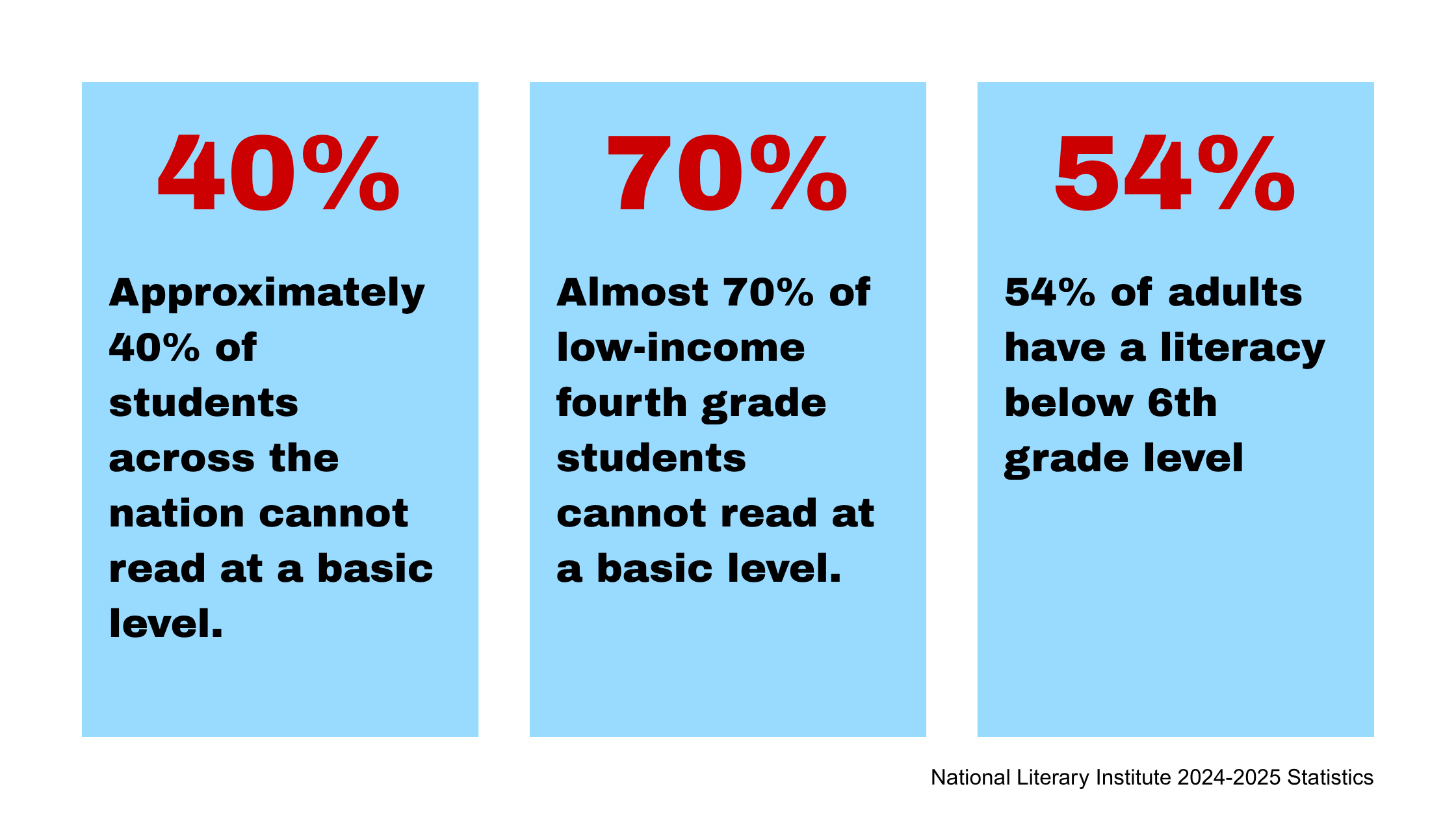
Reading books, listening to books, and engaging with books can counter this trend. I have seen it happen. I have had students who hated reading become so intrigued by a class discussion of a book that they came in the next day, having read the next several chapters, fueled with passion and needing to discuss it. Or the students who have said to me, “I never read a book that was about me before. Like, really, about me. I couldn’t stop reading.” We need children to read and love reading because the future of our world depends on it.
But moments like these are being eviscerated from our schools as books are being banned, authors, teachers, and librarians are being attacked, and the representation of marginalized groups is being challenged at every turn. Why? Enemies of literacy have made books for young readers a political target in an effort to dumb down the masses and control what the most vulnerable members of our society question, learn, and think.
The success of series such as Harry Potter, The Hunger Games, Diary of a Wimpy Kid, and Goosebumps proves that books for young people hold power. Why would we not want to harness that power for the betterment of society? In the film, You’ve Got Mail, the main character, Kathleen Kelly, says, “When you read a book as a child, it becomes part of your identity in a way that no other reading in your life does.” Children want to be seen and heard. Every type of children’s book has a hand in that. They validate feelings, answer unaskable questions, foster imagination, cultivate empathy, and challenge young people to think critically.
So when I sit down to write, I think of those women who first encouraged me. How would their worlds be different if they had been seen and heard and valued? I think of the kid in my classroom, so painfully shy, that reading may be the comfortable friend they rely on to get through the day. Or, the student, so desperate to escape the world they live in, they devour fantasy or sci-fi or romance or horror novels to comfort their weary minds.
I have had thousands of students pass through my classroom over the years, each with a unique story, pain, and need. Unfortunately, Mac Barnett, the National Ambassador for Young People’s Literature snobbishly and irresponsibly made a comment in his newly released book that “94.7 percent of kids books are crud,” (Make Believe 2026) and too didactic. I wholeheartedly disagree. Different kinds of kids need different kinds of books. Their needs and wants are as diverse as they are.
Thankfully, The Booker Prize Foundation saw fit to do otherwise. Instead of recklessly criticizing an already struggling industry, they have decided to celebrate writing for young readers by launching a Booker Prize for Children’s Literature in 2027 to be judged by children. Gaby Wood, chief executive of the Booker Prize Foundation, said in a statement, “This new prize is underpinned by a social mission: to create future generations of lifelong readers.” (Publishers Weekly, April 2026)
Among my KidLit colleagues, I can attest to the steadfast commitment to this mission. I do not see “crud,” I see a group of individuals who care deeply about the future world we are cultivating for our children. I see a group of individuals who value every child as a reader and a full-fledged person in our society. I see a group of individuals who want to instill a sense of hope in future generations at a time when they may only feel despair, frustration, and invisibility.
I am proud to learn from these authors of children’s literature and walk alongside them on this journey. So, to that question, “Why children’s literature?” I can only say – because every child matters and the future of our world depends on it.
Thank you for taking a few minutes of your time and for reading my words. 📚
What was your favorite book as a kid, and why did you love it? Please share – I would love to hear from you in the comments below!
ⓒ Angie Gascho 2026. All rights reserved.
In case you missed these:


Angie, you have the wisdom to lead this charge and the passion to see it through! I’m touched by your spirit of generosity and true understanding of what kids need—what we ALL need—to survive the downward spiral of engagement and literacy. Bravo!
My fave? Everything Beatrix Potter. The art. Their perfect-to-hold littleness. The naughty bunnies.